0
0
 0
0


Dems Want To Make Socialist, Anti-Police Mayoral Candidate The Future Of Party Nationwide
https://dailycaller.com/2025/06/25/democrats-zohran-mamdani-socialist-future-party-new-york-city

ISI/DI: Make no mistake, the “future” of the Democrat Party, nationwide, means a future run for the presidency of America. If / when that happens, America is over, and everyone should get out their Qur’an ……… unless you stand with another God, then, you should do as you do now — on your knees, hands folded and clasped together, and PRAY.
The actions of this Muslim will only embolden other Muslims with political aspirations. And that will be the beginning of the end, as Muslims set about their main task, of making “America Muslim, all of America Muslim.”
Democrat Mayoral Jihadi Zoran Mamdani Defended UK Muslim Terrorists Who Beheaded Lee Rigby On London Public Street in Broad Daylight
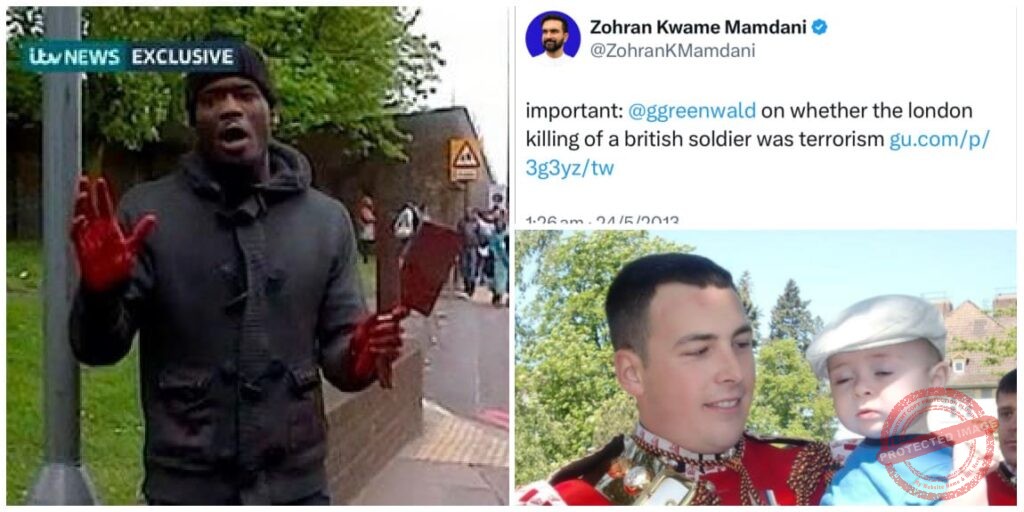
ISI/DI: This guy is VERY dangerous to America …… and on a fast-track to be mayor of one of our largest cities, New York City. He is on the same scale as Sidiq Khan, the Muslim mayor of London.
What makes him so dangerous? Two things:
- Look at his ideology. He professes to be a Socialist, one step away from being a Communist. Proposing EVERYTHING for Free. WHO and HOW will this be paid for?
- Look at his association of being a Muslim. Not a moderate Muslim, but a RADICAL MUSLIM.
Sidiq Khan, the current mayor of London, is now in his final term (he said he will not run again) as mayor, has left his religious mark, not just on London, but the country as well.
TWO VIEWS OF ARMAGEDDON
CHRISTIANITY & ISLAM
Christianity
According to biblical prophecy, particularly as described in the Book of Revelation, the final battle of Armageddon is preceded by and intertwined with a series of significant events and conditions. Armageddon is often interpreted as a final battle against Christ and His followers, marking the culmination of God’s judgment and leading to the Second Coming of Jesus Christ.
Points In Christian Theology Regarding Armageddon
God’s Judgment: Armageddon signifies the release of God’s judgment upon the world and the wicked.
Final Opposition To Christ: It is seen as a final, intensified attempt by Satan and his followers (represented by the Antichrist and False Prophet) to oppose Christ and deceive the world.
Christ’s Victory: The outcome of the battle is certain – Christ will return and decisively defeat His enemies, leading to their destruction and damnation.
Second Coming: The battle of Armageddon is followed by the triumphant return of Jesus Christ in His second coming to judge the ungodly and establish His kingdom.
Deliverance Of The Saints: Believers will be delivered from the forces of Satan and enter into a glorified state with Christ.
Actions And Events Prophesied To Take Place
Leading Up To Armageddon
Rise Of The Antichrist: A figure of great power and deception will emerge, who will initially establish false peace and deceive many;
Establishment Of False Peace: This deceptive figure will work to create a false sense of peace on Earth, perhaps through a covenant with Israel;
Deception And Persecution: The Antichrist will deceive many and kill those who resist him;
Setting
Setting Up An Image In The Temple: An image of the Antichrist will be placed in a rebuilt temple in Jerusalem, and people will be forced to worship it;
Ministry Of Two Witnesses: Two prophets, possibly Elijah and Moses, will preach repentance during this time;
The Rapture: Some interpretations place the rapture of believers before or during the initial stages of the tribulation period, during which Armageddon occurs;
The Tribulation: A period of intense suffering, conflict, and judgment, involving events like the Four Horsemen of the Apocalypse (representing conquest, war, famine, and pestilence), persecution of Christians, and cosmic disturbances;
The Day Of The Lord: A time of God’s wrath and judgment upon a rebellious world, leading up to the final battle;
Gathering Of Nations To Armageddon: Driven by demonic spirits, the kings and armies of the world will be gathered to a place called Armageddon for the final battle;
Drying Up Of The Euphrates River: This event, mentioned in Revelation, is seen as facilitating the movement of armies from the east towards Armageddon.
During And After Armageddon
Christ’s Return: Jesus Christ will return with the armies of heaven to defeat the forces of evil;
Battle At Jerusalem: The armies gathered at Armageddon will march to Jerusalem for the final battle;
Christ’s Victory: Jesus will defeat the armies of the Antichrist, and the Antichrist and False Prophet will be cast into the lake of fire;
Judgment And Establishing Of God’s Kingdom: A period of judgment will follow, and God’s kingdom will be established on Earth, characterized by peace and righteousness.
It is important to note that interpretations of these events vary among different Christian denominations and individuals. Some view Armageddon as a literal battle, while others interpret it as a symbolic representation of a spiritual conflict.
According to Christian eschatology, the Battle of Armageddon, which is seen as a final confrontation between good and evil, is preceded by a sequence of events.
Sequence Of Events
The Rise Of The Antichrist And Establishment Of A False Peace: A powerful, charismatic figure empowered by Satan will appear and initially bring about a period of deceptive peace;
The Tribulation: A seven-year period of severe judgment on humanity, during which the Antichrist’s power will be at its peak;
The Battle Of Gog And Magog: An army from the north, allied with other nations, will attack Israel and be defeated by God’s intervention;
The Abomination Of Desolation: At the midpoint of the Tribulation, the Antichrist will break his covenant with Israel and reveal his true nature, leading to increased persecution of believers;
Various Catastrophic Events: These include painful sores on those with the mark of the beast, seas and rivers turning to blood, intense heat from the sun, and widespread darkness;
The Drying Up Of The Euphrates River: This facilitates the movement of armies from the east towards Israel;
The Gathering Of Armies At Armageddon: Unclean spirits will gather the kings of the world and their armies to the place called Armageddon (Har Megiddo), where the final battle will take place;
Christ’s Second Coming: Jesus Christ will return with the armies of heaven to defeat the forces of evil.
The Battle of Armageddon itself will involve a clash between the forces of the Antichrist and the returning Christ with His heavenly armies, culminating in the Antichrist and the false prophet being cast into the lake of fire and Christ establishing His reign on Earth. This battle is viewed by some as a real future event during the tribulation.
Important Considerations
Varying Interpretations: Within Christianity, there may be some variation in how literally the details of Armageddon are interpreted;
No Premillennial Rapture: Historically, Calvinism has not embraced the concept of a pre-tribulation rapture, where believers are removed from the earth before the Great Tribulation and Armageddon.
Focus On Christ’s Return: The emphasis is on Christ’s final victory and return, which will bring an end to the current age and usher in the full realization of His kingdom.
In essence, Calvinist theology views Armageddon as a climactic event in human history, demonstrating God’s sovereign power and leading to the ultimate triumph of Christ and the establishment of His righteous rule.
Breakdown Of Key Aspects Of The Christian View Of Armageddon
Location: Armageddon is a symbolic location, likely referencing the ancient city of Megiddo in Israel, which has been the site of numerous battles;
Participants: On one side are the forces of evil, led by the Antichrist and the False Prophet, and on the other, Jesus Christ with his heavenly armies;
Nature Of The Battle: While often envisioned as a literal, physical battle, it’s also understood as a spiritual conflict, a culmination of the ongoing struggle between God and Satan;
Outcome: The battle results in the defeat of the Antichrist, the binding of Satan, and the establishment of Christ’s millennial kingdom on Earth;
Significance: Armageddon is not the end of the world in a destructive sense, but rather a pivotal event that brings about the end of an age and the beginning of a new one under Christ’s reign;
Timing: The exact timing of Armageddon is not revealed, though it is associated with the tribulation period and the second coming of Christ;
Misconceptions: It is important to note that the battle of Armageddon is not the end of the world as some people think, but rather the culmination of events that will bring about the end of the current age and the beginning of God’s eternal kingdom on earth.
Armageddon Is Based On The Book Of Revelation 16:16
A Gathering Place: It’s described as the location where the kings of the earth and their armies will gather for a battle on “the great day of God Almighty;”
The Final Confrontation: Armageddon represents the ultimate battle between the forces of good (led by God and Jesus Christ) and the forces of evil (earthly rulers under demonic influence);
A Symbolic Representation: While the term “Armageddon” is derived from the Hebrew for “Mountain of Megiddo” and refers to a historically significant battlefield in Israel, it is often interpreted symbolically as representing the spiritual and cosmic conflict between good and evil, and God’s ultimate victory;
A Battle Of God’s Judgment: The battle is not a battle of human forces against each other, but rather the forces of the earth gathering against God and His appointed ruler, Jesus Christ;
Part Of A Larger Prophetic Picture: Armageddon is connected to a series of events described in the Book of Revelation, including the pouring out of God’s wrath and the eventual establishment of God’s kingdom on earth.
Key Point
Symbolism vs. Literal Interpretation: There are varying interpretations among Christian denominations, with some viewing Armageddon as a literal future battle and others understanding it more metaphorically;
God’s Victory: Regardless of interpretation, Armageddon signifies the definitive clash where God’s justice and righteousness will prevail;
Not The End Of The Earth: While Armageddon is associated with “the end of the world,” the earth itself is mankind’s eternal home, and a “great crowd” of God’s servants are expected to survive.
Theological Implications
Armageddon Highlights
- The importance of righteousness and faithfulness for Christians;
- God’s sovereignty and power over all creation;
- The hope for God’s ultimate plan of redemption centers on the restoration of all things and the final triumph over sin and evil, culminating in a new heaven and a new earth. This plan, rooted in the Old Testament and fulfilled through Jesus Christ, offers believers forgiveness, reconciliation with God, and the promise of eternal life.
Elaboration
New Testament Fulfillment: The New Testament reveals that Jesus Christ is the fulfillment of God’s redemptive plan. His life, death, and resurrection provide the atoning sacrifice for humanity’s sins, offering forgiveness and reconciliation with God;
Restoration And New Creation: The ultimate hope of redemption lies in the restoration of all things and the creation of a new heaven and a new earth, where sin and its consequences are absent. Revelation 21:4-5 describes this future, promising the end of death, mourning, crying, and pain;
Living In Hope: For believers, hope in redemption is both a present reality and a future expectation. It is a source of strength and perseverance amid trials, grounded in God’s faithfulness and the accomplished work of Christ.
CONCLUSION
It should to be remembered that this is just one view of Armageddon from a Christian position. There are other views held by individuals and denominations, where the timing may be different or some of the ‘players’ may be different, etc. However, in broad terms, it is a generally accepted description.
ARMAGEDDON
Islam
In Islamic eschatology, the final period leading up to the Day of Judgment (Yawm al-Qiyamah) involves a series of significant events, including a major war known as Al-Malhama Al-Kubra, which is comparable to the concept of Armageddon in Christianity.
These events are signs for believers to recognize the approaching end times and to prepare for the Day of Judgment through righteous living.
According to Islamic eschatology, the emergence of the Dajjal (often referred to as the Antichrist) is indeed connected to a period of intense tribulation and conflict. This era is often referred to as the “Greater Signs” of the end times.
Signs Before The Dajjal’s Emergence
Al-Malhama Al-Kubra (The Greatest Battle): This is prophesied to be an apocalyptic war occurring before the emergence of the Dajjal and is considered the most brutal battle in human history. It is often compared to the Battle of Armageddon in Christian eschatology;
Famine And Drought: There will be a severe drought and famine for three years before the Dajjal’s arrival, with decreasing rainfall and produce;
Dajjal’s emergence amidst turmoil: The Dajjal will appear during a period of great tribulation and will be a major source of deception and oppression.
Famine And Drought: There will be a severe drought and famine for three years before the Dajjal’s arrival, with decreasing rainfall and produce;
Loss Of Religious Knowledge: Religious knowledge will diminish, and ignorance will become widespread;
Emergence Of False Prophets: There will be an appearance of false prophets who will deceive many people;
Severe Trials And Tribulations: The world will experience widespread suffering due to severe trials and tribulations;
Widespread Immorality And Corruption: Moral values will deteriorate, with open engagement in sinful behavior;
Appearance Of Al-Mahdi: A righteous leader known as Al-Mahdi will emerge before the Dajjal and lead the Muslims, restoring justice.
These signs serve as warnings for believers to prepare spiritually for the trials ahead.
Deception And False Messiah Claims: The Dajjal will claim to be the Messiah and even claim divinity, deceiving many with false miracles;
The Mahdi’s Role: The Mahdi, a rightly guided leader, will emerge before the Dajjal’s appearance and will unite the Muslim community. He is seen as a key figure in the events leading up to the Day of Judgment. He will initially fight the Dajjal, but will be defeated;
Jesus’ Return And Defeat Of The Dajjal: Eventually, Jesus (Isa) will return to earth, defeat the Dajjal, and establish peace. This defeat will be followed by a period of security and tranquility.
In summary, Islamic prophecies depict a sequence of events where a devastating war (Al-Malhama Al-Kubra) precedes the appearance of the Dajjal, an evil figure who spreads deception and leads a great tribulation. Jesus’ return will then bring an end to the Dajjal’s reign and usher in a time of peace.
Actions And Events Preceding Al-Malhama Al-Kubra (Armageddon) In Islam
Precedes The Day Of Judgment: The Malhama (fierce, bloody war, massacre, or slaughter) is not the final event, but a significant prelude to the Day of Judgment and the end of the world;
Brutal Warfare: It is characterized by intense and widespread conflict, with some traditions describing it as the most devastating war in human history;
Muslims vs. Non-Muslims: The Malhama typically involves a large-scale conflict between Muslims and their adversaries, often described as the Romans or those who are not aligned with Islamic beliefs;
Internal Conflicts: Some traditions suggest that the Malhama will be preceded by or intertwined with internal conflicts and civil wars among Muslims themselves, potentially involving three armies vying for power;
Significance Of Syria (Bilades Sham): Many traditions place the Malhama in or near the region of Syria (Bilades Sham), highlighting its importance in the end-times scenario;
Specific Events: Various signs and events are associated with the Malhama, such as the drying up of the Euphrates River, the appearance of the Dajjal, and the emergence of Gog and Magog;
Not A Standardized Narrative: While the core concept of a final, apocalyptic battle is consistent, specific details and interpretations of the Malhama vary across different Islamic traditions and texts;
Moral Decay And Societal Problems: Islam highlights a decline in moral values, the prevalence of illegal activities, the spread of ignorance, and other forms of societal degradation as signs of the End Times;
Conflicts And Wars: Increased fighting between groups of Muslims, along with other conflicts and tribulations, are expected;
Emergence Of False Prophets: A number of individuals will falsely claim prophethood, potentially preceding the Dajjal;
According to Islamic beliefs, the appearance of the Mahdi, a divinely guided leader who will restore justice and righteousness, is prophesied to occur in the end times. The path to his appearance is associated with several signs and events.
Some Of The Steps And Signs Believed To Lead To The Mahdi’s Appearance, Based On Islamic Eschatological Traditions
Widespread Corruption And Injustice: The Mahdi will appear when the world is filled with wrongdoing and oppression, signifying a time of great need for his divine guidance and leadership;
Societal Turmoil And Moral Decay: Islamic teachings suggest a period of societal disintegration, widespread conflict, and a decline in moral values leading up to the Mahdi’s arrival;
Time Of Fear And Afflictions: People will experience great fear, natural disasters like earthquakes, and widespread diseases;
Breakup Of Religious Unity: Disagreements and divisions will occur within the Muslim community;
Despair And Hopelessness: People will feel a sense of despair and long for relief from the prevailing hardships.
Specific Signs
Emergence Of The Sufyani: An outwardly devout but wicked figure will emerge in Syria before the Mahdi’s appearance;
Appearance Of The Yamani: An army from Yemen will rise and ally with the Mahdi against the Sufyani;
A Loud Cry In The Sky: A heavenly announcement will be heard, indicating the Mahdi’s arrival;
The Murder Of Nafs Al-Zakiyyah: A messenger of the Mahdi will be killed;
Earth Sinking In The Land Of Bayda: An army sent by the Sufyani to fight the Mahdi will be swallowed by the earth;
Lunar And Solar Eclipses In Ramadan: Some narrations mention unusual astronomical events, such as a lunar eclipse at the beginning of Ramadan and a solar eclipse in the middle of it, as signs of the Mahdi’s coming;
Disagreement Over Succession Of An Arab King: Following the death of an Arab king, there will be a dispute over who will succeed him;
A Man From Medina Emerging And Hurrying To Mecca: The Mahdi will secretly leave Medina for Mecca, where people will recognize him and pledge allegiance to him;
The Euphrates River Revealing A Mountain Of Gold: This will cause a great deal of conflict and death;
Appearance Of Black Banners From Khorasan: These banners will fight until they are planted in Jerusalem.
After The Mahdi’s Appearance
Appearance Of The Dajjal (Antichrist): The Mahdi will face the Dajjal, a figure of deception and evil, who will spread corruption throughout the world;
Descent Of Jesus (Isa): Jesus will return to Earth and join the Mahdi in his mission to defeat the Dajjal and establish justice;
Jesus Praying Behind The Mahdi: This act will symbolize the unity of their missions and the superiority of Islam;
Jesus Killing The Dajjal: Jesus will defeat the Dajjal, bringing an end to his reign of terror;
Appearance Of Gog And Magog: These destructive forces will emerge after the Dajjal is defeated;
Final Judgement: Eventually, after a period of justice and peace established by the Mahdi and Jesus, the Day of Judgement will arrive.
It is important to note that interpretations of these signs and the exact sequence of events can vary among different Islamic scholars and traditions.
The Steps Leading To The Mahdi’s Appearance
According to Islamic eschatology, the appearance of the Mahdi, a messianic figure who will bring justice and righteousness, is heralded by a series of events and signs. The order and specific details of these events can vary slightly between different Islamic traditions, particularly between Sunni and Shi’a interpretations.
Steps And Signs Leading To The Mahdi’s Appearance
Prevalence Of Injustice And Corruption: Before the Mahdi’s arrival, the world is prophesied to be filled with injustice, oppression, and moral decay. People may experience fear, turmoil, and a general longing for death due to the prevailing difficulties.
Appearance Of Specific Figures
The Sufyani: Some narrations mention the emergence of the Sufyani, a wicked figure who will rise in Syria before the Mahdi’s appearance. The Sufyani will be defeated by the Mahdi or be swallowed up by the earth along with his army;
The Yamani: The appearance of the Yamani from Yemen is also mentioned as a sign. This figure will call people to the Mahdi and his movement will be a sign of guidance and prosperity;
The Khurasani: Some sources suggest that the Yamani and a figure from Khorasan will be allied against the Sufyani, paving the way for the Mahdi’s emergence.
Specific Events
The Loud Cry In The Sky: A heavenly cry, possibly from the angel Gabriel, will announce the Mahdi’s reappearance;
The Murder Of Nafs al-Zakiyyah: The killing of an innocent soul, a Hashimite youth, will also be a significant sign, awakening consciences and preparing people for the Mahdi;
Earth Sinking In The Land Of Bayda: The army of the Sufyani is prophesied to be swallowed by the earth in the desert between Mecca and Medina.
Other General Signs
Increase In Natural Disasters: There will be an increase in earthquakes, floods, and other natural calamities;
Moral And Religious Decay: Religious knowledge will diminish, immorality and ignorance will become widespread, and some individuals may claim to be prophets;
Battles And Conflict: The world may experience frequent wars and conflict, with people yearning for an end to the turmoil;
Emergence Of The Mahdi: Finally, the Mahdi will emerge, likely in Mecca, and people will recognize him and pledge allegiance to him. He will lead the forces of good against evil, restoring justice and righteousness to the world.
It is important to note that the exact interpretation and timing of these signs are subject to ongoing discussion and different viewpoints within Islam.
The Great War (Al-Malhama Al-Kubra): A major battle will occur, often involving Muslims and a non-Muslim ally. This battle is believed to be incredibly fierce;
The Conquest Of Constantinople: Following the great war, the conquest of Constantinople (Istanbul) by Muslims is expected;
Emergence Of The Dajjal (Antichrist): The Dajjal will appear and attempt to deceive people with false miracles;
Descent Of Jesus (Isa): Prophet Jesus will descend to Earth and defeat the Dajjal.
The Battle Of Dabiq: Some prophecies specifically mention Dabiq, a location near Aleppo in Syria, as the site where Muslims will confront and defeat their adversaries in a significant battle.
Important Considerations
The Qur’an’s Role: While the Qur’an mentions signs leading up to the Day of Judgment, including the Dabbat (Beast) and Gog and Magog, it does not explicitly mention the Dajjal by name. The Dajjal and other specific details about the End Times are primarily found in the Hadith (one of Islam’s holy books with sayings and actions of Prophet Muhammad);
Interpretation And Belief: Different interpretations exist regarding the precise order and nature of these events. For instance, some interpretations of the Dajjal see him as a symbol of materialism or spiritual blindness rather than a literal figure;
Focus On Preparation: Islam emphasizes that the exact timing of the Day of Judgment is known only to Allah. Therefore, Muslims are encouraged to focus on preparing for it by living a righteous life, adhering to Islamic teachings, and seeking Allah’s guidance.
In Islam, “Armageddon” is often referred to as Al-Malhama Al-Kubra, 0meaning “The Greatest Battle.” It signifies a period of major apocalyptic events leading up to the Day of Judgment (Yawm al-Qiyamah), rather than a single event.
According To Islamic Eschatology, The Following Actions Or Events Must Take Place For Al-Malhama Al-Kubra To Occur
1. A Major Conflict/Battle:
Al-Malhama Al-Kubra is a prophesied large-scale battle, considered by some traditions to be the most brutal in human history;
It is described as a conflict between Muslims and a non-Muslim ally.
Some interpretations suggest a confrontation will arise after a shared victory, when one side claims the cross brought the victory, and a Muslim asserts God’s role and destroys the cross, leading to further conflict.
2. The Emergence Of Dajjal (The Antichrist):
The Dajjal is a false messiah figure who will spread corruption and deceive many with false miracles;
He is prophesied to appear soon after the Malhama Al-Kubra;
Dajjal will be confronted and killed by Jesus (Isa), according to Islamic belief.
3. The Return Of Jesus (Isa):
Muslims believe Jesus will descend from heaven and play a key role in the end times, particularly by killing the Dajjal;
He will also destroy crosses and abolish the jizya tax (paid by non-Muslims living under Muslim rule).
4. The Appearance Of Gog And Magog (Yajuj And Majuj):
These are two nations described as having a massive army that will emerge near the time of the Day of Judgment;
Their invasion will cause widespread panic and destruction;
They will eventually be destroyed by deadly insects sent by Allah in response to Jesus’s prayer.
They will eventually be destroyed by deadly insects sent by Allah in response to Jesus’s prayer.
5. Other Associated Signs:
The Sun Rising From The West: A major sign indicating the imminent arrival of the Day of Judgment;
The Emergence Of The Beast Of The Earth (Dabbat Al-Ard): A creature that will emerge and speak to people, marking believers and disbelievers;
Widespread Smoke: A cloud of smoke will cover the earth, causing suffering;
Three Landslides: Large-scale landslides in the east, west, and Arabian Peninsula;
Fire In Yemen: A fire will erupt in Yemen, driving people to their final gathering place;
Destruction Of The Ka’bah: The Ka’bah in Mecca will be destroyed.
Important Notes
While the Qur’an mentions some of these events, many details are elaborated upon in Hadith (sayings and actions of the Prophet Muhammad);
The exact order of these events is not always clear and is subject to different interpretations among Muslim scholars;
These events are signs for believers to recognize the approaching end times and to prepare for the Day of Judgment through righteous living.
Side Bar
The Shelf-Life Of Islam
Research suggests that the topic of Islam’s survival after 1,500 years often focuses on the duration of Islam on Earth according to some Islamic traditions and interpretations.
However, it is important to distinguish between scholarly historical accounts of Islam’s development and longevity and theological or eschatological interpretations about the end times or the lifespan of the religion on Earth.
Islam’s Survival And Its Historical Trajectory
Historical Spread And Influence: Islam, originating in the 7th century, spread across vast areas and fostered sophisticated centers of culture and science during its “Golden Age,” with innovations in various fields like mathematics, medicine, and philosophy. The expansion of Islamic empires and trade networks played a significant role in this diffusion and the development of distinct Muslim cultures in different regions.
Theological Interpretations Of Lifespan: Some sources refer to a belief within Islam that the religion has a specific lifespan on Earth, often citing hadith that mention 1,500 years. These sources suggest that after this period, the Hour (Day of Judgment) would be established. There are different interpretations of these hadith, with some scholars disputing their authenticity or the specific timeline. Some interpretations suggest a period of 1,000 years, potentially extended by 500 years based on certain historical events.
Challenges And Resilience: Throughout its history, Islam has faced various challenges, but it has demonstrated remarkable resilience, continuing to be a major global religion with a growing population.
It Is Important To Note
- Authentic hadith do not provide a definitive lifespan for Islam.
- Interpretations regarding a 1,500-year lifespan are often based on less reliable or debated hadith.
- The exact timing of the Hour is unknown and solely within the knowledge of Allah according to Islamic belief.
In conclusion, while there are discussions and interpretations within some Islamic circles about the lifespan of Islam on Earth, based on certain hadith, the survival and influence of Islam throughout its nearly 1,500-year history are widely documented and studied by scholars of history and religion. The focus of such historical accounts is typically on the religion’s spread, cultural contributions, and ongoing significance.
Survival Of Islam After 1,500 Years
The survival and continued influence of Islam after 1,500 years is a testament to its adaptability, resilience, and unique features that resonated with people across diverse cultures and throughout history.
Key Factors Contributing To Its Enduring Presence
Resilience And Adaptability
Emphasis On Resilience (Sabr): Islam teaches the importance of patience (Sabr) in facing life’s challenges, empowering individuals to cope with adversity and maintain faith during difficult times.
Trust In Allah (Tawakkul): Placing trust in Allah provides a sense of peace and reassurance, knowing that one is not alone in their struggles.
Community Support (Ummah): The emphasis on community (Ummah) fosters strong social bonds, offering support and encouragement in times of need.
Adaptive Nature Of Islamic Law (Shari’a): While core Islamic beliefs and principles remain constant, Islamic law (Shari’a) has demonstrated its ability to adapt to evolving societal needs, embracing technological advancements and modern tools for teaching and practice.
Pragmatism And Innovation: Throughout history, Muslims have adapted to different cultural and intellectual contexts, using available resources and ideas to explain and share Islamic teachings.
Key Aspects Of Islamic Teachings
Focus On Peace And Justice: Islam’s message of fairness, equity, and justice appealed to many, particularly in societies experiencing oppression or inequality.
Tolerance And Inclusiveness: The historical tolerance of Islam towards people of other faiths, particularly during the early Islamic empires, facilitated its spread and acceptance.
Emphasis On Knowledge And Intellectual Engagement: Islamic civilization flourished with significant contributions to various fields like mathematics, astronomy, and medicine. This emphasis on knowledge and intellectual discourse has helped Islam remain relevant in a changing world.
Moral And Ethical Values: The emphasis on strong moral values and ethical conduct in Islam has resonated with people seeking a moral compass and spiritual grounding.
Historical Factors
Spread Through Trade And Conquests: Early Islamic empires expanded through both military conquests and trade routes, facilitating the spread of Islamic teachings and cultural exchange across vast regions.
Establishment Of A Unified Community: The early establishment of a strong Islamic state in Medina, united under common faith and governance, provided a foundation for future growth and consolidation.
Overcoming Internal And External Challenges: Islam has faced various challenges throughout its history, including internal conflicts, external opposition, and societal transformations. However, the resilience of Muslims and the adaptability of Islamic teachings have enabled them to overcome these challenges and thrive.
In summary, Islam’s survival and enduring presence are a combination of its core teachings, its ability to adapt and be resilient in the face of change, and the historical factors that facilitated its spread and growth. The emphasis on patience, trust in Allah, community support, the adaptability of Shari’a, and the ongoing engagement with knowledge and intellectual discourse are crucial elements in understanding the survival of Islam after 1,500 years.
CONCLUSION
As with all content on our website, this is not what I believe about Islam, but rather, what Muslims themselves believe about their religion. Unlike Christianity, there are only a few views on Armageddon and Islamic eschatology. Most will either follow the Sunni or Shi’ite belief (it is possible they even hold the same view), which represents 98 percent of Islam’s population.
NEXT ISSUE: A closer look at Jihadi Zohran Mamdani of New York City. Is he a Socialist? What are his aspirations, other than making America Muslim ……… all of America Muslim.
See COPYRIGHT Information Below.